



Church of the Redeemer History
The First Protestant Church in Biloxi
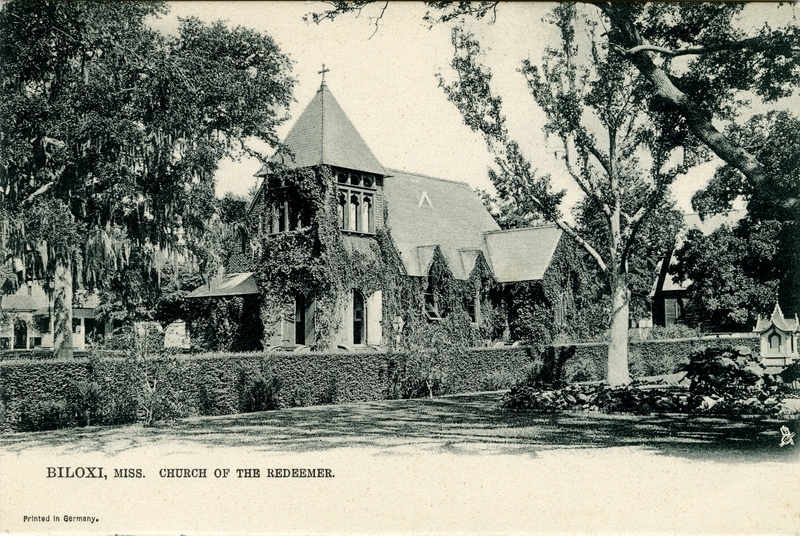 Although occasional services were held earlier, Redeemer's history officially began back in 1849 when the first regular Episcopal services and Reverend Thomas S. Savage began his pastoral care of the people of the Gulf Coast. These services were held in private homes and later in the Masonic Temple’s basement. A charter was received from the Mississippi Legislature in 1853 and the church admitted to the Diocese in 1859. This church was the first Protestant church in Biloxi.
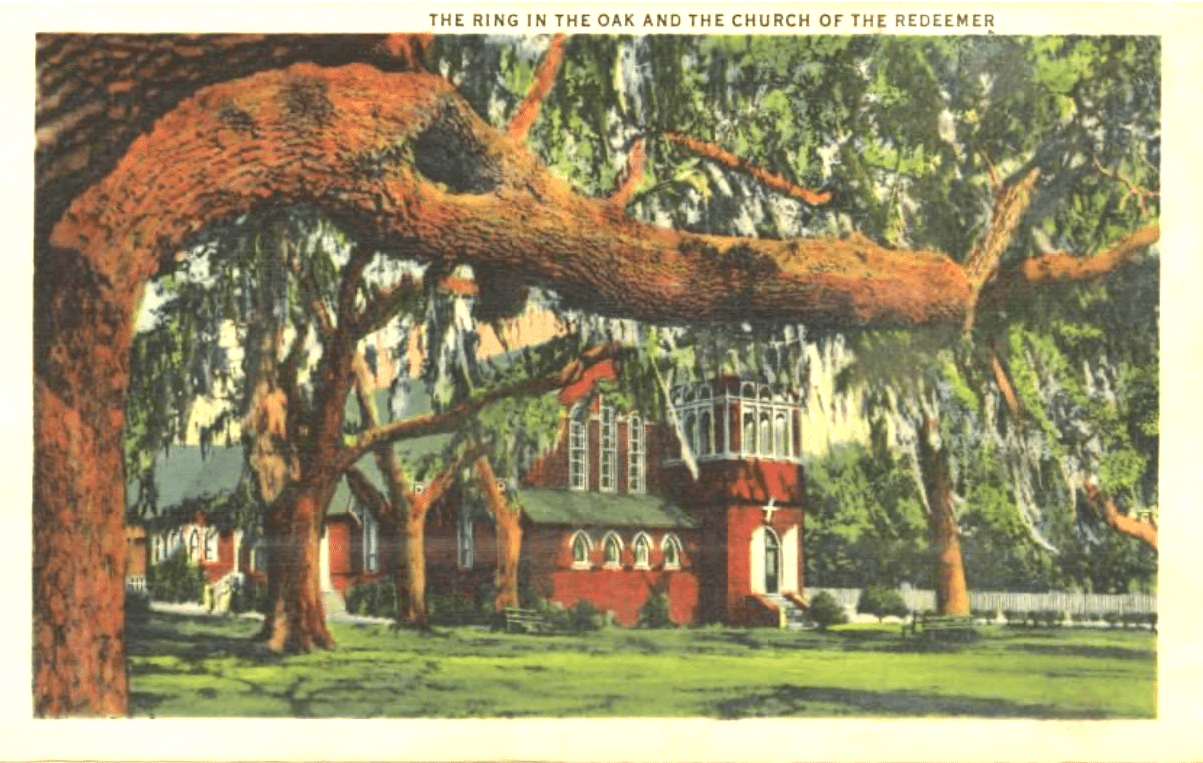
In 1891, the church was moved to property donated by Harry T. Howard, on Beach Boulevard and Bellman Street. On this new site, Mr. Howard built a church the next year. This church was dedicated to the memory of Rev. R. G. Hinsdale, who was rector of the parish and who died about the time the building was consecrated. The original church at the corner of Howard Ave and Nixon Street ecame the parish hall.
Mr. Harry Howard’s father, Charles, donated an adjoining house to serve as the rectory. The Howards lived next door and had made their fortune from operating the Louisiana Lottery.
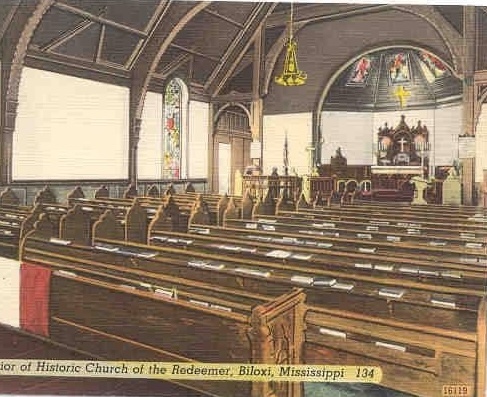
The “new church,” as it was called, was used for seventy-eight years. During these years the church was well known historically since several of its members had been prominent in the Civil War. A group was formed called the “Door Keepers.” This group conducted tours of the church showcasing many of the memorials, altar pieces, and stained glass windows, and explained their historical significance.
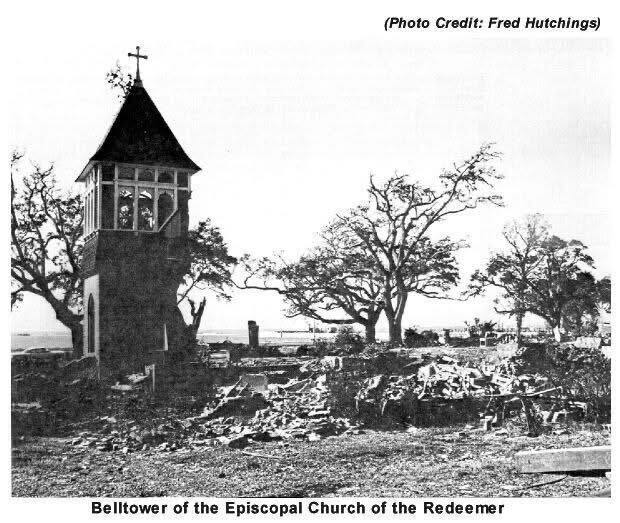
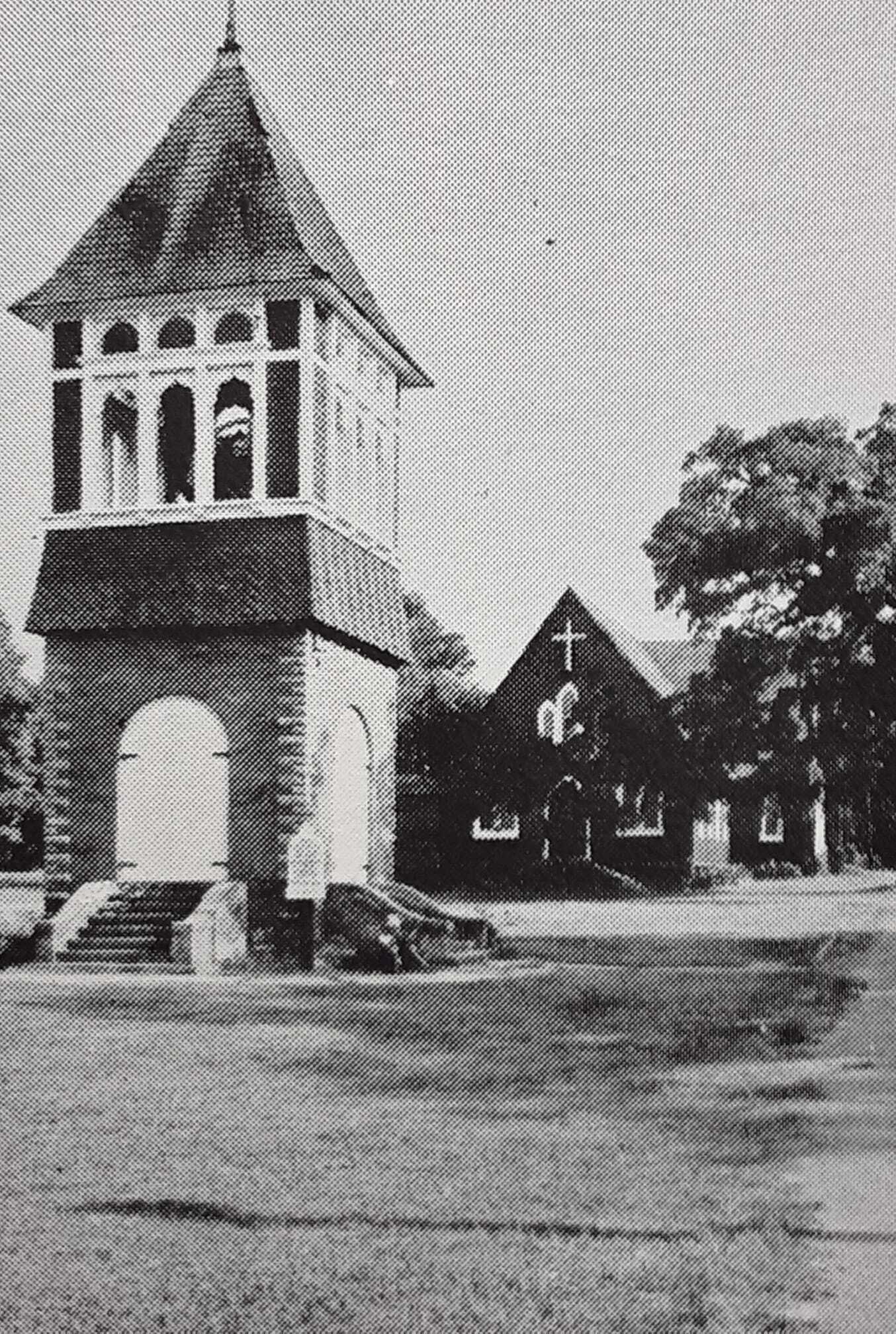
On August 17, 1969, Hurricane Camille destroyed the “new church” and the rectory. The “old church” was also heavily damaged. Only the bell tower and the “old church” remained. 131 people along the Mississippi Gulf Coast died in Hurricane Camille. Survivors said they heard Redeemer's bell tolling throughout the night. It was reassuring and was taken as a sign of hope for the community.
Workman placed beams under the foundation to shore up the old church structure. Our church family is indebted to the young men from Keesler Air Force Base who cleaned the building, scraped out mud, and cleared away debris. However, before the debris was hauled away, church members and friends searched, sifted, and collected pieces of glass from the stained glass windows that had been imported from Germany by the Jefferson Davis family. Mrs. Everette Pease, an Ocean Springs artist and parishioner, designed a window of Christ for the new sanctuary from some of these fragments.
Mrs. Pease was also able to persuade Dr. Paul Dufour, Louisiana State University professor, to work on a project for the church. Dr. Dufour and some of his students volunteered their time and talents to create the “Window of Hope.” This beautiful piece of artwork was placed in the bell tower. The bell tower was open twenty-fours a day for prayer. Carrying baby Jesus from the church to the bell tower while singing traditional carols following the midnight mass on Christmas Eve became a tradition of the church.
The first service held in the repaired and remodeled remaining church was on Christmas Eve 1969. Bricks from the destroyed church were sold and a cookbook was created in 1970 to help cover costs of rebuilding and remodeling.
After Camille, the women’s group began hosting an antique show. It was a quality event, held for over twenty-five years. Dealers representing at least nineteen states were found at the Coast Coliseum and Convention Center. The proceeds were used for various repairs to the church.
Sometime in the late 1970’s, Father Jack Biggers, later the first bishop of Northern Malawi, began the Blessing of the Animals at Redeemer. Grand Marshall for the event was Rover, a stray dog who became the church’s mascot and friend. The tradition, which was begun as a tribute to St. Francis of Assisi and his wonderful relationship with animals, was the first of its kind on the Gulf Coast.
In 1979, it was obvious that seating capacity of the church would have to be increased to accommodate the growing congregation. It was decided that a temporary place of worship and new office facilities were needed. DeMiller Hall, named in honor of Rev. Edward DeMiller, a long-time Rector at Redeemer, was built to house office space, meeting rooms, and to also serve as a temporary house of worship.
The next year, 1980, the remodeling and enlargement of the church was completed. Later DeMiller Hall was expanded to add Sunday school rooms, a library, and a chapel.
In 1990, the church purchased the recently renovated Gillis House from Joe and Shirley Thornton to serve as the rectory. The house was built in 1838 and contained two small cottages in the rear of the property. The style of the house was Louisiana Plantation, which featured deep overhangs encircling the entire structure.
In 1994, after fundraising efforts, a Scants 14-rank pipe organ was installed in the sanctuary. This magnificent instrument allowed our church to provide unique musical programs to the community. This was all under the direction of Dr. Laurence Oden, the remained he church organist until his death.
The pumpkin patch was begun at Redeemer in the early 1990s and has become a much-loved Biloxi tradition. Daycares and elementary schools make field trips to the event each October. The proceeds are used to fund the church’s youth programs.
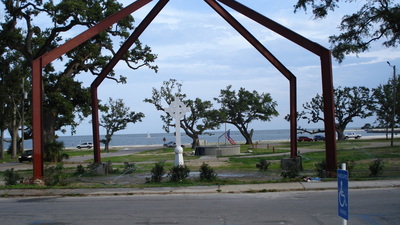
In 1999, as part of Redeemer’s sesquicentennial celebrations, Father Harold Roberts suggested a Camille Memorial be built. Julia Cook Guice, a parishioner, local historian, and retired Civil Defense director, headed the project. She enthusiastically pulled together a committee of people from across the entire Coast. Dennis Cowart was the architect and every community in Harrison and Jackson Counties contributed to the expense. The names of the 131 victims were inscribed. on marble This memorial still stood at our property on Beach Boulevard until heavily damaged in hurricane Katrina.
On August 29, 2005, as though our church and the Mississippi Gulf Coast had not endured enough, Hurricane Katrina hit .
The Sunday immediately following Hurricane Katrina, Father Roberts held services, including the Eucharist, on the grounds of the destroyed church and bell tower. The spirit of our church community would not give up. Property was purchased on Popps Ferry Road for the new church, DeMiller Hall was being restored, and services were held at North Bay Elementary School. On Easter Sunday 2007, we moved back into DeMiller Hall and used it as our sanctuary until our present building was completed.
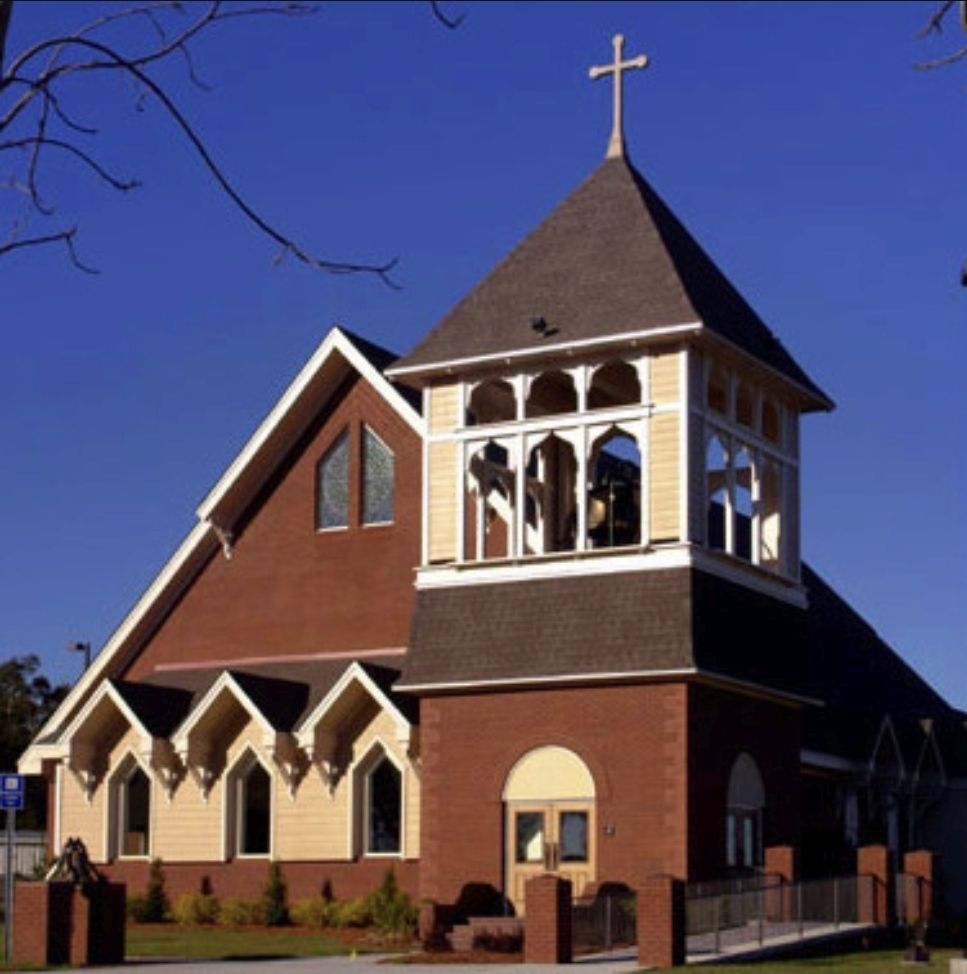
The congregation moved into the new church building on Popps Ferry Road on the Wednesday evening before Thanksgiving of 2010. Many parts of the building were constructed from recovered wood and glass from the beachfront churches. Life began anew in a space designed to celebrate memories of our past and to explore a new future together.
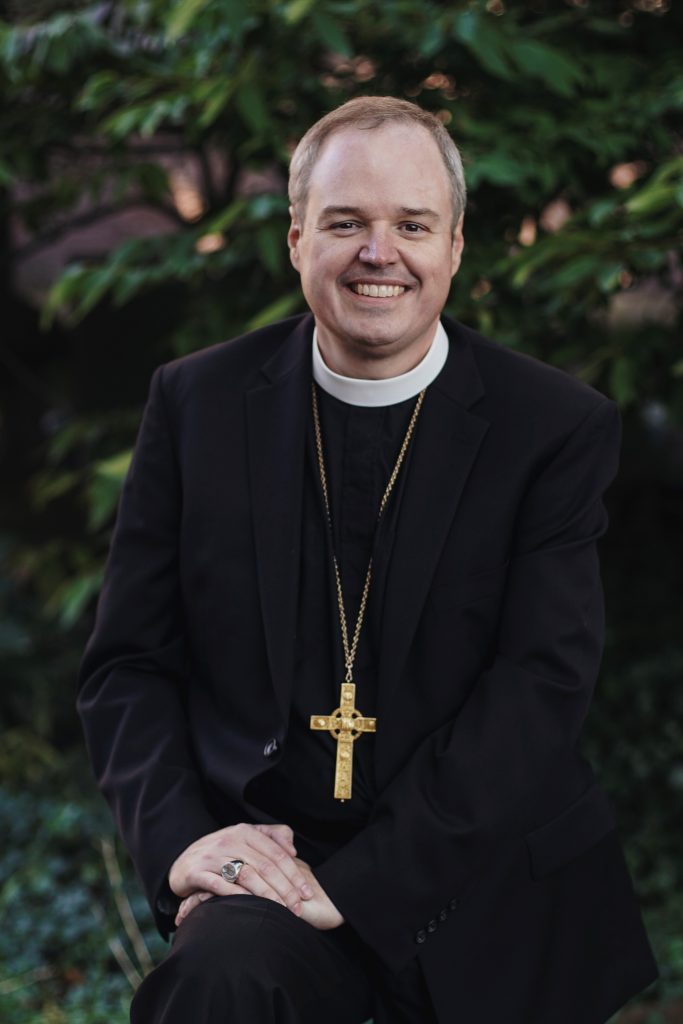
In September of 2011, the Reverend Robert Wetherington was called as Priest-in-Charge. He was followed by Reverend Jennifer Southall and Reverend Chris Robinson.